IT'S EASY TO GET STARTED! IN STUDIO & ONLINE PIANO INSTRUCTION FROM THE CURIOUS PIANIST!


Welcoming kids and adults of all ages for in studio, online, and hybrid piano lessons in the San Francisco Bay Area serving the local communities and school districts of Saratoga, Los Gatos, Los Gatos Mountains, Monte Sereno, Cupertino, Westmont, Campbell, West San Jose, San Jose, Sunnyvale, Palo Alto, Los Altos, Cambrian Park, Santa Clara, Mountain View and for remote and online students everywhere! Traditional private instruction will be tailored to your student using with modern techniques and methods! For online or hybrid students, an immersive multi-camera approach provides engaging and fun remote lessons! Homeschoolers welcome!
Contact me for a "get acquainted" meeting/lesson! 🍎 🎹 🎶
Deborah's Piano Lessons
Private Piano Instruction with Deborah Savage
TAKE LESSONS IN PERSON, ONLINE, OR A COMBINATION OF BOTH! FOR THOSE WHO PREFER, LEARN VIRTUALLY FROM THE COMFORT AND CONVENIENCE OF YOUR OWN HOME
For non-local students in the domestic US or beyond, remote instruction is also available to accommodate your time zone!
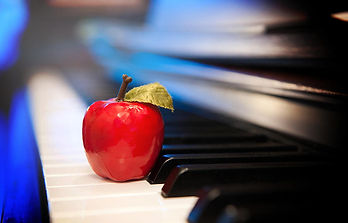
School Days, School Days!
It's a great time to set some musical goals for the new year! What do you want to accomplish?
🍎 🎹 HAPPY SEPTEMBER! 🎹 🍎
😀 🎹 PIANO LEVELS & PROGRESS 😀 🎹
INDIVIDUAL DIFFERENCES
Several factors can influence one child's progress in piano lessons compared to another. While each child is unique and learns at their own pace, these are some key elements that can affect the speed and quality of their development:
1. Natural Aptitude and Musicality
Some children have a natural ear for music, better fine motor skills, or an innate sense of rhythm, which can give them an advantage. While talent isn’t everything, it can play a role in how quickly they pick up new skills.
2. Practice Habits
Consistent, focused practice is the most significant factor in progress. A child who practices regularly and with intent will generally advance faster than one who practices infrequently or without focus. Quality of practice is more important than quantity; a well-structured 15-minute session can be more effective than an hour of unfocused playing.
3. Parental Involvement and Support
Children who have parents actively involved in their music education, helping with practice routines, offering encouragement, and setting goals, tend to progress faster. Positive reinforcement and interest in what the child is learning can greatly impact motivation and consistency.
4. Learning Style
Every child has a unique learning style (visual, auditory, kinesthetic). Some may grasp new concepts more quickly depending on how the material is presented. A teacher who adapts their approach to match a child’s learning style can make a significant difference.
5. Teacher’s Approach and Experience
The teaching style, method, and experience of the instructor play a crucial role. An engaging, patient, and experienced teacher who understands how to tailor lessons to the individual student’s needs and interests will foster more rapid and enjoyable progress.
6. Personality and Motivation
Children who are self-motivated, curious, or enjoy challenges are often more eager to practice and improve. Conversely, children who are more reluctant or easily discouraged may require additional support to stay motivated.
7. Physical Coordination and Fine Motor Skills, Eye-Tracking
Children who have better hand-eye coordination or well-developed fine motor skills often progress faster, especially in the early stages where hand positioning and finger control are critical. The varying and evolving structure of young children's hands as the joints and cartilage change over time also affects a beginning student's ability to form a piano hand position and move finger's independently. The ability to target and track musical notation similar to regular reading, also impacts a student's ability to focus on the music.
8. Attention Span and Focus
Children with longer attention spans and better focus tend to learn faster, as they can absorb more during lessons and practice sessions without getting distracted. Focus can be built gradually, but initially, it plays a significant role.
9. Lesson and Practice Environment
A quiet, dedicated space for both lessons and practice is important. Distractions at home or during lessons can slow progress. A child who practices in a peaceful environment is more likely to have productive sessions.
10. Repertoire and Material
Engagement with the music they are playing is key. If the material is too difficult, too easy, or not interesting to the child, progress can be slow. Balancing challenge with enjoyment is essential.
11. Peer Influence and Group Learning
Children who see their peers progressing or who participate in group classes may feel inspired to put in more effort. On the other hand, some children can feel discouraged if they compare themselves negatively to siblings or others.
12. Consistency of Lessons
Regular attendance and consistent scheduling of lessons are important. Gaps or irregular lessons can disrupt momentum and hinder progress.
**********************************************************************************
SKILL ACQUISITION AND GRADED LEVELS
There are formal and informal levels used by piano teachers throughout the world. These levels typically map loosely to graded materials and methods. Here is a typical breakdown of learning levels with the average time a student might spend on each typical level, using ranges to accommodate different learning speeds:
1. Pre-Beginner/Introduction (Level 0):
-
Focus: Familiarizing with the piano, basic hand positioning, and simple musical concepts.
-
Skills: Learning finger numbers, exploring the keyboard, playing simple patterns, and recognizing high/low sounds.
-
Materials: Simple exercises, musical games, and songs using only a few notes.
-
Average Duration: 3-6 months.
2. Beginner (Level 1):
-
Focus: Building fundamental skills and starting to read music.
-
Skills: Recognizing notes on the staff, playing simple melodies with one hand, basic rhythms (quarter notes, half notes).
-
Materials: Beginner method books, simple songs that use C, D, E, F, G notes.
-
Average Duration: 6-12 months.
3. Late Beginner (Level 2):
-
Focus: Expanding hand coordination and note reading.
-
Skills: Playing with both hands, introduction to more notes, basic dynamics (loud/soft), and simple articulations (staccato/legato).
-
Materials: Songs that involve more notes and use both hands, basic scales.
-
Average Duration: 6-12 months.
4. Early Elementary (Level 3):
-
Focus: Developing fluency in reading music and playing with both hands.
-
Skills: Reading music more fluently, playing pieces with both hands together, introduction to different time signatures.
-
Materials: Pieces that require coordination between both hands, easy scales.
-
Average Duration: 9-15 months.
5. Elementary (Level 4):
-
Focus: Strengthening technical skills and introducing simple expressive elements.
-
Skills: Playing simple pieces in different keys, learning basic scales and arpeggios, introduction to phrasing.
-
Materials: Pieces in G major, F major, or A minor, simple classical pieces, and folk songs.
-
Average Duration: 9-15 months.
6. Late Elementary (Level 5):
-
Focus: Enhancing musicality and preparing for more complex rhythms.
-
Skills: More complex rhythms (eighth notes), playing pieces with contrasting dynamics, developing a sense of musical form.
-
Materials: Beginner sonatinas, pieces by composers like Clementi, and technical exercises.
-
Average Duration: 12-18 months.
7. Early Intermediate (Level 6):
-
Focus: Developing hand independence and understanding musical structure.
-
Skills: Playing scales in multiple octaves, mastering arpeggios, introduction to more complex pieces with varied articulations.
-
Materials: Simple sonatinas, pieces by composers like Bach, and Czerny exercises.
-
Average Duration: 12-18 months.
8. Intermediate (Level 7):
-
Focus: Tackling more challenging pieces with greater technical demands.
-
Skills: Mastering scales and arpeggios in all major and minor keys, understanding complex rhythms, and developing hand independence.
-
Materials: Pieces by composers like Beethoven, Mozart, and Chopin, more advanced technical exercises.
-
Average Duration: 1.5-2.5 years.
9. Late Intermediate (Level 8):
-
Focus: Preparing for advanced repertoire with a focus on expression and phrasing.
-
Skills: Playing more complex and expressive pieces, developing a deep understanding of musical form, and refining technical skills.
-
Materials: Beethoven’s sonatas, Chopin’s waltzes, and advanced studies like Czerny.
-
Average Duration: 1.5-2.5 years.
10. Early Advanced (Level 9):
-
Focus: Mastering advanced techniques and performing more sophisticated pieces.
-
Skills: Playing virtuosic pieces, refining technical skills, and deepening expressive abilities.
-
Materials: Advanced classical repertoire, such as works by Liszt and Rachmaninoff.
-
Average Duration: 2-3 years.
11. Advanced (Level 10):
-
Focus: Preparing for performance-level pieces and refining interpretive skills.
-
Skills: Full mastery of technical skills, advanced sight-reading, and developing personal interpretation.
-
Materials: Concertos, virtuosic pieces by composers like Prokofiev and Debussy.
-
Average Duration: 2-3 years.
12. Professional/Performance (Level 11-12):
-
Focus: Achieving the highest level of technical and musical proficiency.
-
Skills: Preparing for professional performances, competitions, and teaching.
-
Materials: Full concert repertoire, advanced works by major composers.
-
Average Duration: Varies widely depending on goals—can range from 3-5 years or more.